|
The impact of buildings on the environment is enormous and diverse, therefore, the green transformation and development of the construction industry is an important step in mitigating and adapting to climate change. In recent years, many studies have found that the usage stage of buildings is the stage with the greatest environmental impact. But with passive The establishment and popularization of the concept of low-energy housing, especially through the use of renewable energy, often result in the main impact of new buildings on the environment being reflected not only in the usage phase but also in the building products and construction phase. This study selected existing residential buildings in Austria as samples, By comparing and analyzing, detailed ecological impact data is calculated, aiming to provide theoretical basis for improving the proportion of ecological building materials used.  The definition of ecological building materials is renewable, resource friendly, reusable, regional, and durable. These features are typically compared in life cycle assessment (LCA) and can be determined by various parameters at different stages of the life cycle. They are divided into product and construction phase (module A), usage phase (module B), end-of-life phase (module C), and benefits and loads outside the system boundary (module D). This study mainly focuses on the ecological impact analysis of the products and construction stages (Module A) of the sample buildings, At the same time, systematic monitoring and calculation were also carried out for several other stages.  The purpose of the study is to identify which components of the building have the greatest impact and whether there are differences between these two construction methods. This study employed Life Cycle Assessment (LCA) and more detailed analysis, And using eco2sof software and WUFI Plus software combined with recent regional climate data, the energy demand for building heating and cooling was calculated. 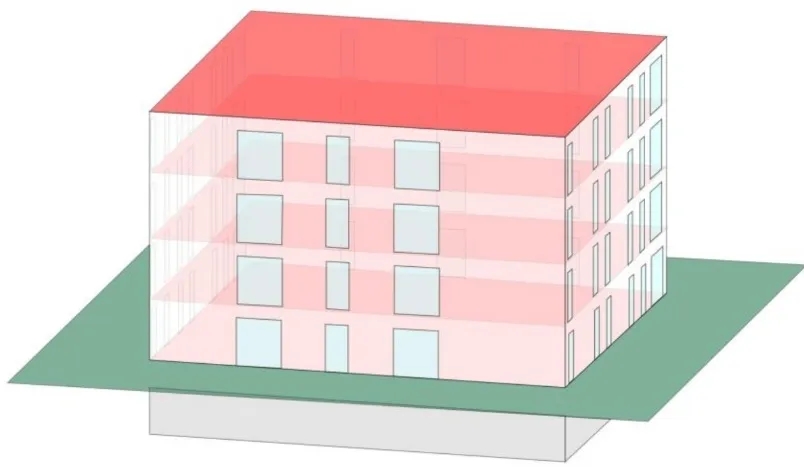
The research object is located in Barangasse, Austria, consisting of two four story residential buildings of the same size and volume. One of them is built with wood, while the other is constructed with concrete. Both buildings were completed in 2021, and their locations and external views are shown in Figure 1. 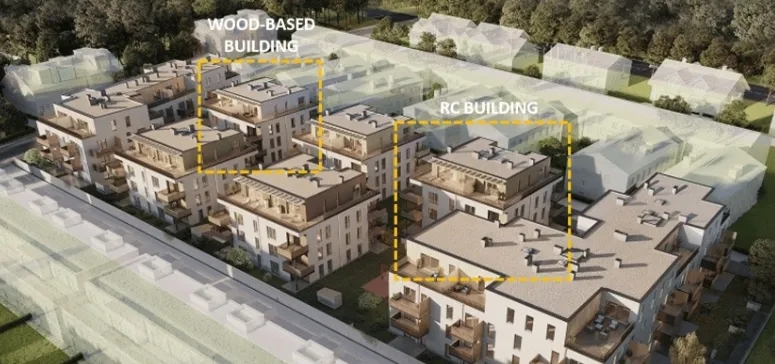
Figure 1. A 4-story residential building with wooden and concrete structures in Austria List of Materials for Wooden Residential Buildings The load-bearing structure is entirely made of wood, the exterior walls are made of wood frames with mineral wool insulation, while the load-bearing interior walls and all floor structures except for the ground floor are made of CLT. The partition boards between floors are mainly made of CLT boards, flat layers, XPS, and mineral wool soundproofing materials. NO.2 List of Materials for Steel Concrete Residential Buildings The exterior wall is made of reinforced concrete, combined with EPS insulation material and gypsum. The floor structure separating the floors is made of concrete, followed by cement bonded EPS and EPS insulation layer. The indoor partition wall is made of conventional lightweight steel plate, covered with gypsum gypsum board, lined with glass wool, and all indoor surfaces are made of gypsum.
As shown in Table 1, the ecological calculation in this study used the following 7 indicators. At present, these seven indicators are widely recognized as authoritative standards for international architectural ecological impact analysis, with significant official and referenceable value.
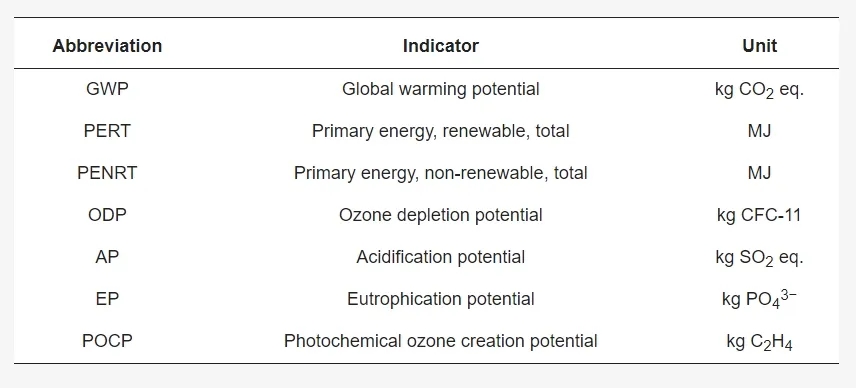
Table 1. Seven indicators for calculating ecological impact ·Global Warming Potential (GWP): A relative indicator used to measure the potential impact of greenhouse gases on global warming ·PERT (primary energy, renewable energy, and total): It is an indicator for measuring the consumption of renewable energy ·PENRT (primary energy, non renewable energy, and total): is an indicator for measuring the consumption of non renewable energy ·ODP (Ozone Depletion Potential): It is an indicator used to measure the ability of chemicals to destroy the ozone layer ·AP (Acidification Potential): Used to measure the total amount of acidic pollutants generated during the production, use, and treatment of a product ·EP (Eutrophication Potential): Represents the contribution of a product to eutrophication during the manufacturing process ·POCP(Potential value of photochemical ozone generation): Used to measure the potential value of photochemical ozone generation
According to calculations, for wooden structures, the Global Warming Potential (GWP) indicator shows a negative value because wooden buildings store carbon dioxide. Compared to the shell of wooden buildings, the shell of concrete buildings has the greatest impact on the environment, as shown in Figures 3 and 4.
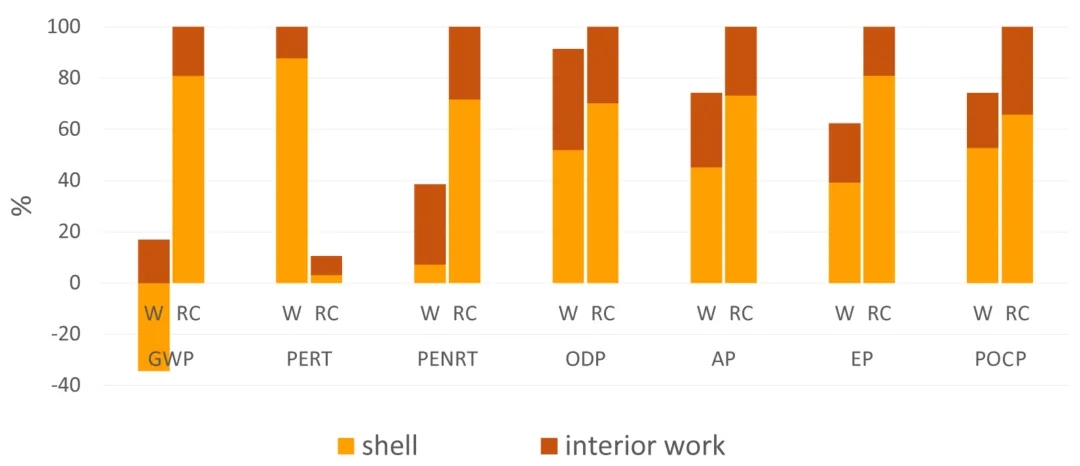
Figure 3. Ecological impacts reflected in the shell and interior of wooden (W) and steel-concrete (RC) buildings
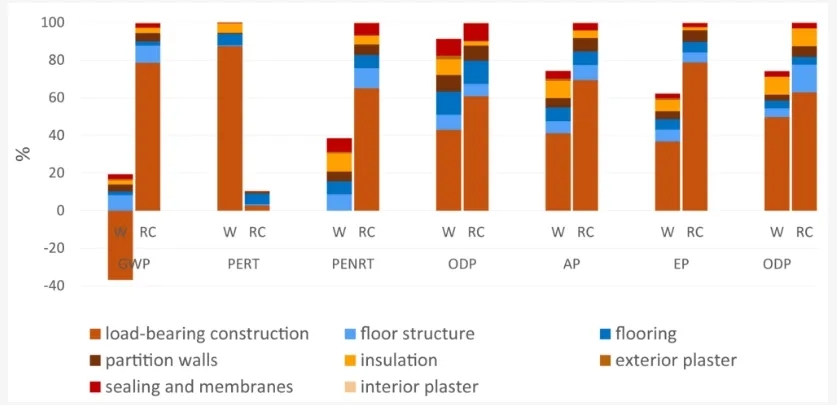
Figure 4. Ecological impact of wooden (W) and steel-concrete (RC) building components
NO.1 Ecological impact of internal structure of wooden buildings
The internal structure of wooden buildings is divided into 7 items (as shown in the table below), calculated according to 7 calculation indicators, and the calculation results are shown in Figure 6. Among the five indicators (PERT, AP, ODP, EP, POCP), the proportion of load-bearing structures is the highest, accounting for 87%, 55%, 47%, 59%, and 67% respectively, The floor structure and flooring of buildings account for the largest share of global warming potential (GWP) (43%+10%). Meanwhile, studies have shown that CLT consumes 40% less energy than GLT (glued laminated wood), Therefore, by using CLT instead of GLT in the load-bearing structure, floor structure, and flooring of wooden buildings, the ecological optimization of the building can be further achieved. The internal structure of wooden buildings:
①load-bearing structure ②floor structure ③flooring ④partition walls ⑤insulation ⑥exterior plaster ⑦sealings and membranes
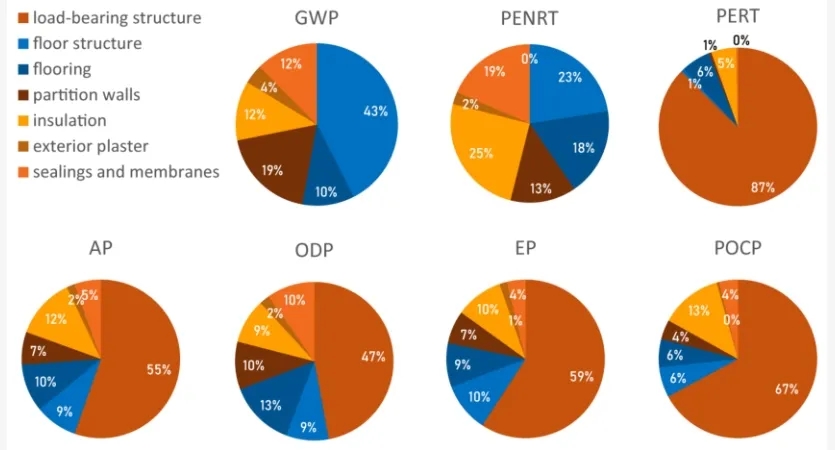
Figure 6. Ecological Impact of Internal Components in Wooden Buildings NO.1 Ecological impact of internal structure of steel-concrete buildings
钢The internal structure of the hybrid building is divided into 8 items (as shown in the table below), calculated according to 7 calculation indicators, and the calculation results are shown in Figure 7. Among the six indicators (GWP, PENRT, AP, ODP, EP, POCP), the impact of load-bearing structures accounts for the largest proportion, at 79%, 65%, 70%, 61%, 79%, and 63%, respectively. As with wooden buildings, the combination of floor structure and flooring accounts for the second highest impact on various indicators, accounting for approximately 11% to 60%. This proves that the load-bearing structure, floor structure, and flooring of concrete buildings have the greatest ecological impact. Internal structure of steel-concrete buildings:
①load-bearing structure ②floor structure ③flooring ④partition walls ⑤insulation ⑥exterior plaster ⑦sealings and membranes ⑧interior plaster
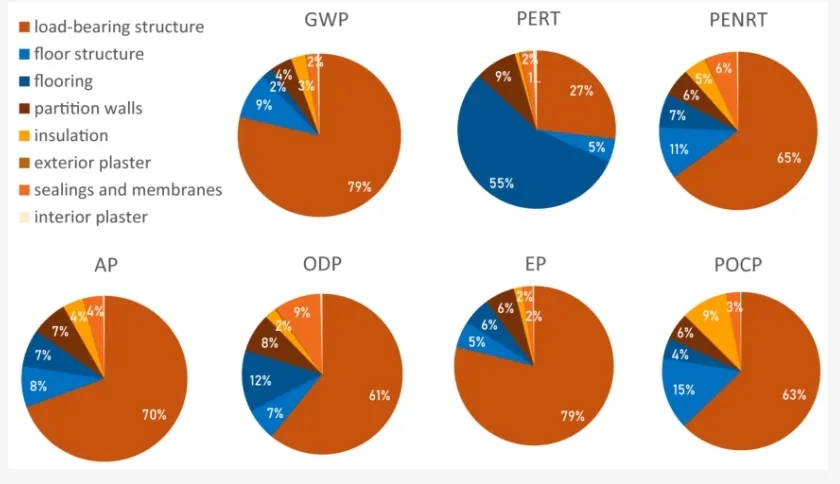
Figure 7. Ecological impact of internal components of steel-concrete buildings
Both buildings use gas and centralized heating as their energy sources. Through systematic calculations, it is determined that the building product stage (modules A1-A3) accounts for the largest share of ecological impact. The product stage of wooden structures has a negative global warming potential. Meanwhile, among the two energy supply methods, wooden buildings have an average 7% less impact on the environment than concrete buildings, as shown in Figure 5.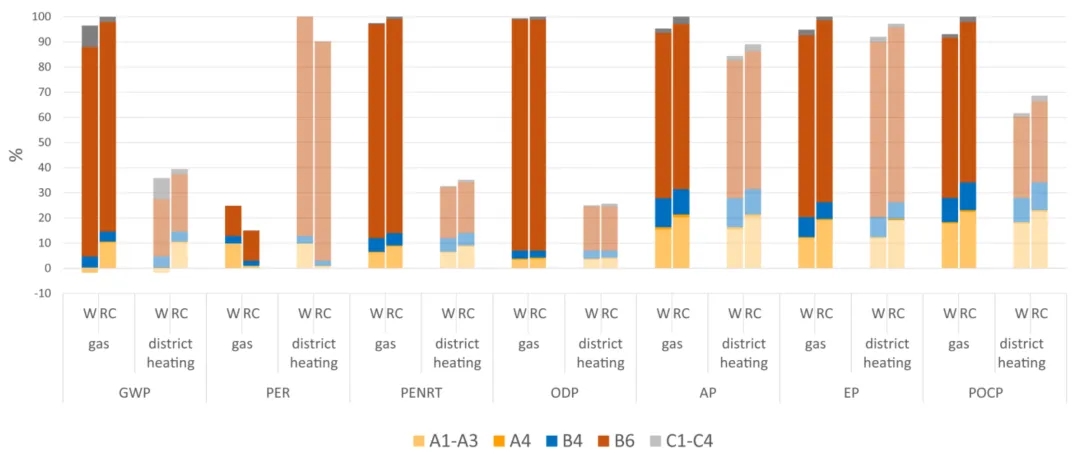
Figure 5. Ecological Impact Comparison of Wooden Structure Buildings (W) and Steel Concrete Buildings (RC) at Various Stages
Experts assume that the temperature in the area where the two buildings are located is not lower than 20 ° C and not higher than 27 ° C. The simulated heating and cooling energy demand results are shown in Table 2. It can be clearly seen that, The annual heating energy consumption of two buildings decreases over time, while the demand for cooling increases. Meanwhile, compared to wooden structures, in order to maintain a temperature of 20 ° C throughout the year, Steel reinforced buildings require more energy consumption for heating in winter. 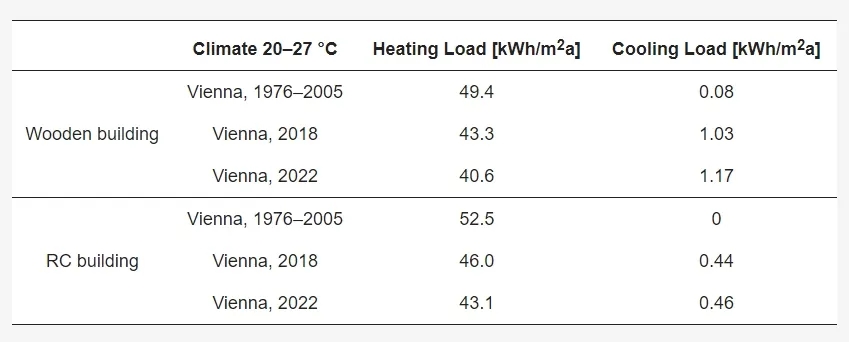
Table 2. Cold and hot loads of wooden and steel-concrete buildings
Research has shown that for the construction of multi story buildings, whether it is wooden or steel-concrete structures, the optimization design of each internal structure needs to be considered, especially the optimization design of load-bearing structures and floor and floor structures. Secondly, compared to steel-concrete structures, wooden buildings have a smaller ecological impact and require less energy to maintain indoor temperature. Therefore, by promoting wooden structure buildings and increasing the proportion of CLT usage, It can effectively reduce the impact of buildings on the ecological environment. In this case study in Austria, many ecological advantages of constructing residential buildings with wooden structures were demonstrated, This study will provide theoretical basis and data reference for Austria to build more ecological buildings, and also point out the direction for the development of architecture in cities around the world. 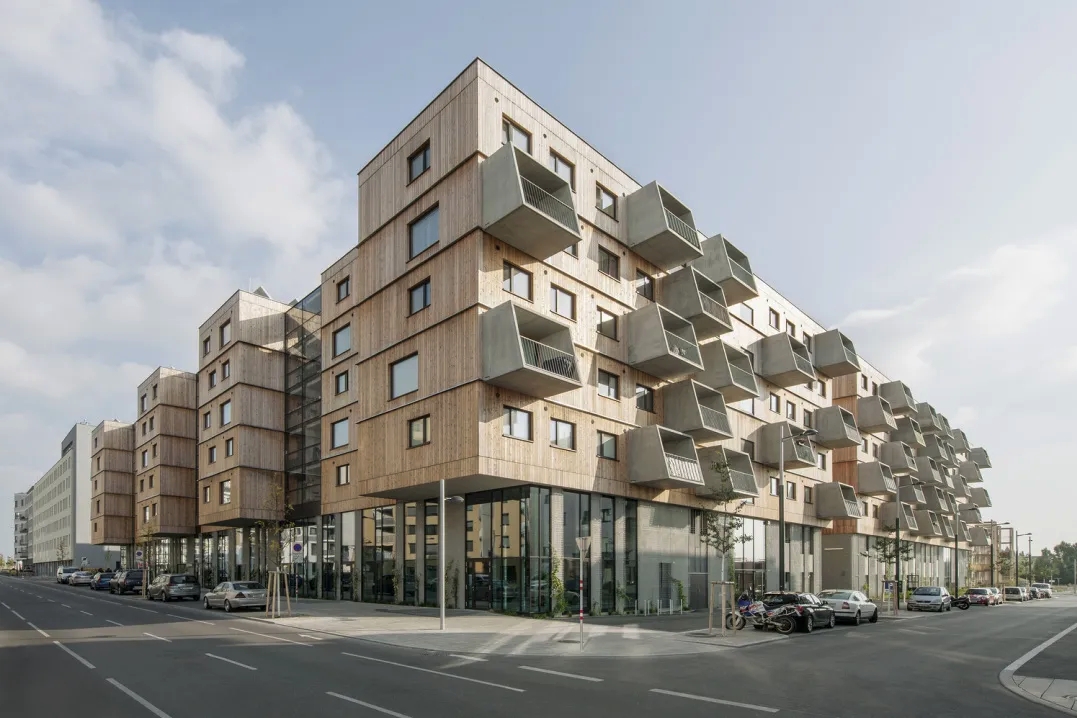 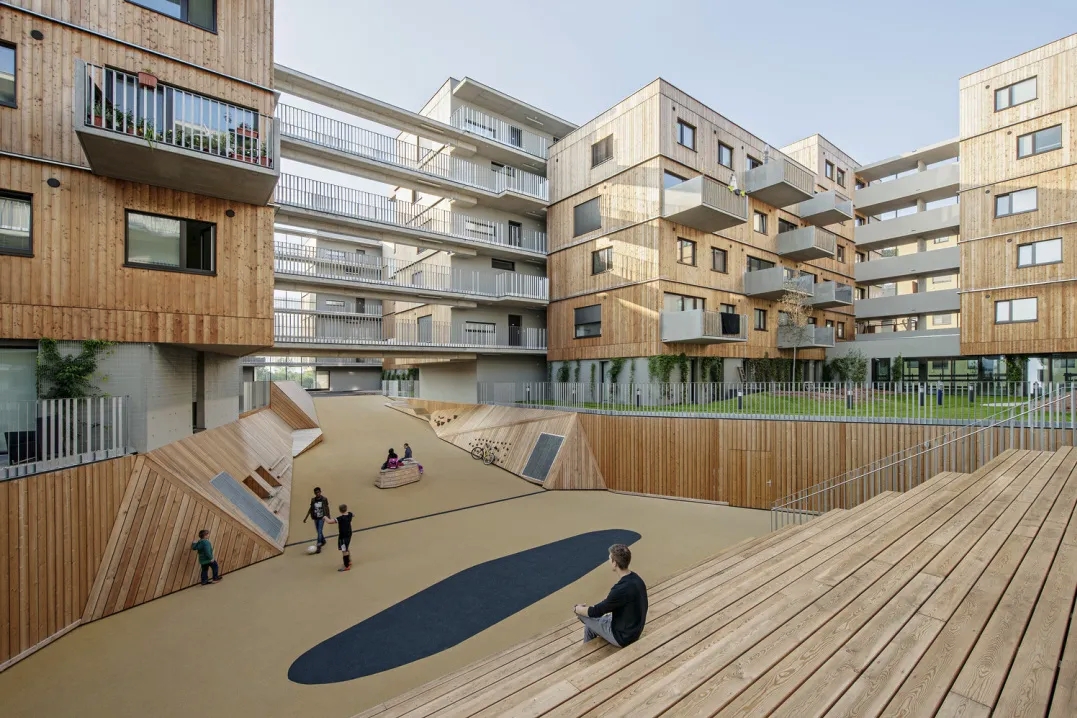
Austria Vienna Scattered Wooden Box Apartment ©Hertha Hurnaus |


 MR SHEN
 +86 18938073910





 +86 18938073910
 2570986365@qq.com
 Address: Group 31, Songnan Village, Shaxi Town, Taicang City, Suzhou, Jiangsu Province


