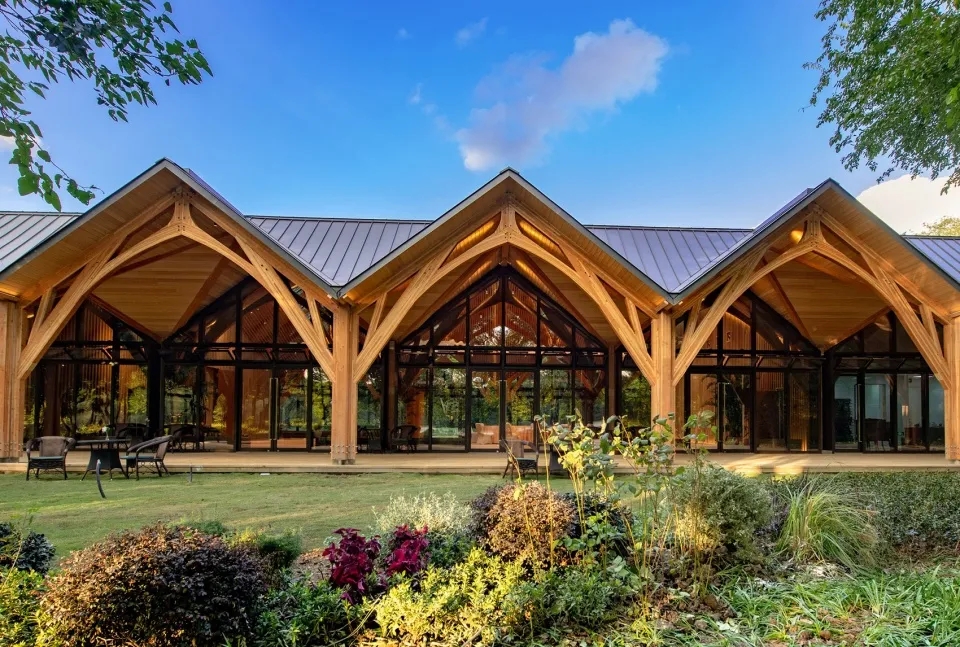
The 2024 International Wood Structure Industry Development Seminar was successfully held on September 6th in Rizhao, Shandong. At the meeting, Wang Xiaozhu, Senior Director of Canadian Wood Market Development, gave a report on the theme of "Development and Technological Innovation of Canadian Wood Structure Industry".There has always been a misconception among the public that deforestation is absolutely destructive. However, Canada has set an example for the development of timber structures with its unique forestry resource management, comprehensive timber grading system, active policy guidance, and clear industrial development direction. At the same time, China is actively exploring the application of laminated wood. This article will delve into various aspects of Canadian timber structures, providing insights for the development of the industry.

In many industries other than timber and timber structures, there is a common belief among the general public that deforestation is an absolutely destructive behavior towards nature. However, when we delve into the relevant data, we will have a more objective and comprehensive understanding of this issue.
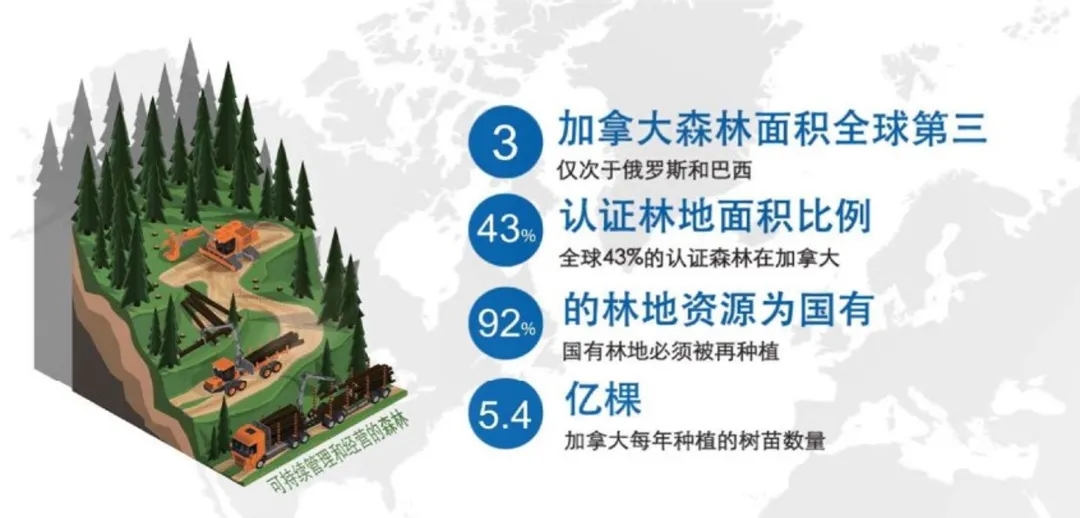
Canadian Forest Resources
Canada, this vast land has up to 348 million hectares of forest land, and the rich deep green seems to be a precious treasure bestowed by nature. Among them, 168 million hectares are forest land that has undergone strict third-party certification and can be effectively managed. Looking back at the data from 2016, it is shocking that 15.48 million hectares of forests were unfortunately destroyed by pest erosion that year; In 2017, forest fires mercilessly consumed 3.37 million hectares of forest area.
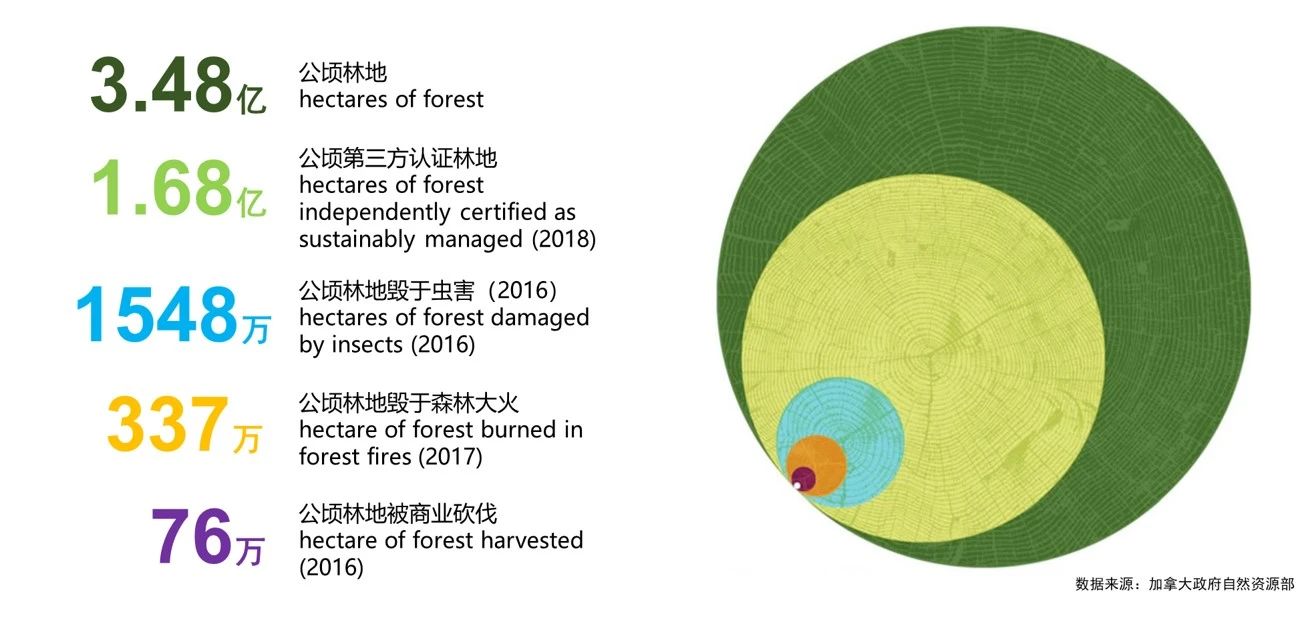
Comparison of Forest Resource Data
In sharp contrast, the actual forest area used for commercial logging is only 760000 hectares. From these data, it can be seen that commercial logging accounts for a very small proportion of the overall utilization of forest resources. On June 28, 2023, smoke from wildfires in Toronto, Quebec, and Nova Scotia covered the land. Canada is facing the worst forest fires in its history, causing losses to forests far exceeding the total amount of commercial development in several years.

The Three Principles of Cutting and Planting
In Canada's sustainable forest management system, there is a crucial principle of "cutting down one plant three". This principle results in a net deforestation rate of only a few thousandths in Canada, fully reflecting the scientific management and sustainable use of forest resources. For example, the 2300 cubic meters of wood used in UBC's impressive 18 story building can regrow in just 6 minutes in the vast forests of North America. This example vividly demonstrates the enormous advantages of wood as a sustainable and renewable resource, as well as the positive impact of environmentally friendly scientific management practices. Canadian Wood Classification System Canada's timber industry has a unique and well-established system. Its wood generation system finely divides wood into structural and appearance levels to better adapt to different application scenarios. This classification plays an important role in both the common furniture production in our daily lives and the field of architectural structures.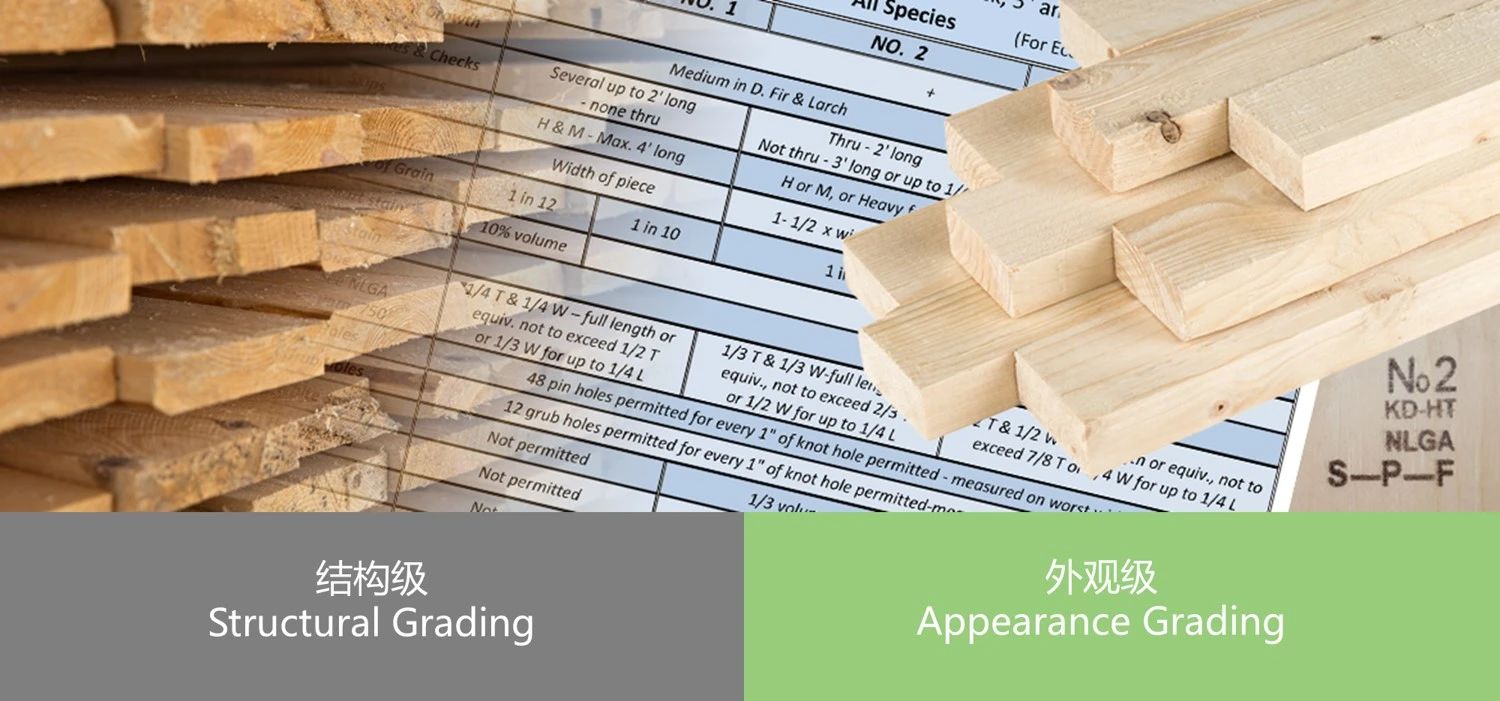 Canadian Wood Classification
In Canada, there is a nationwide Wood Intelligence Manual, and all sawn timber must be certified by a third-party organization in strict accordance with the manual before entering the market for circulation. The manual provides detailed information on the certification unit, production factory code, specific technical indicators, heat treatment method, and evaluation level. This design greatly facilitates users to choose the appropriate wood according to their own needs.
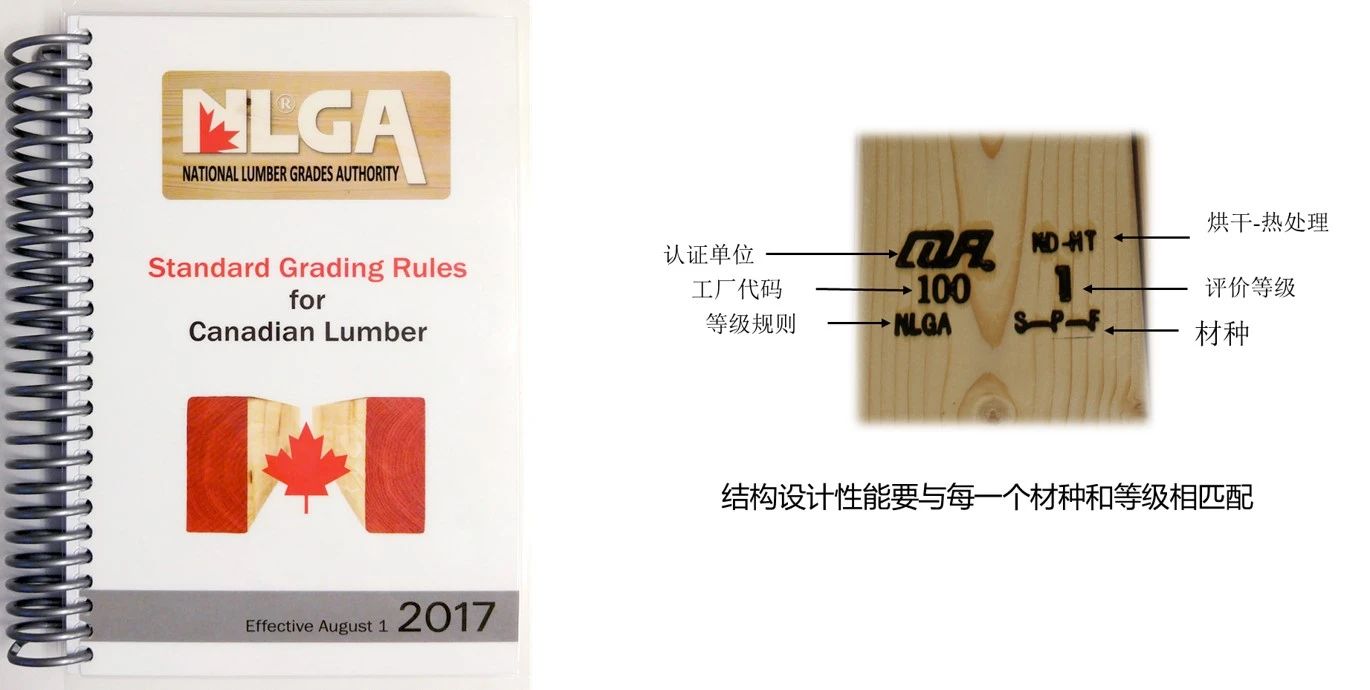
Handbook of Canadian Grading StandardsIn a sense, wood is a precious gift given to us by nature, and how to use it reasonably is the most important issue that our entire industry needs to deeply consider and take seriously. The more expensive and high-grade wood is not necessarily the best. The most suitable wood resources should be selected according to different scene requirements.Guidance on Canadian government policies and lawsThe guidance of government regulations plays a crucial role in the development of Canada's timber industry, especially in the province of British Columbia, where this performance is particularly prominent.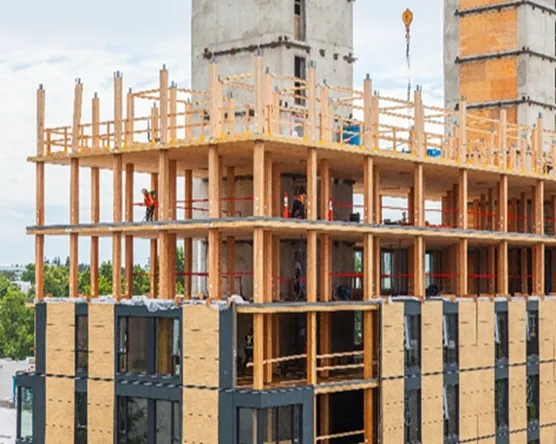
UBC Student ApartmentsThe British Columbia government introduced the Wood First Act in 2009, which stipulates that construction projects funded in whole or in part by various levels of government must prioritize and use wood as the primary building structural material. The bill actively promoted the research and development of related engineering wood, building systems, and fire science, and prompted numerous multi story public building projects to adopt heavy timber structure for construction practice. The most representative project was the Brock Commons, a UBC university student apartment completed in 2017, which became the world's tallest timber structure building at that time with a height of 18 floors and 54 meters.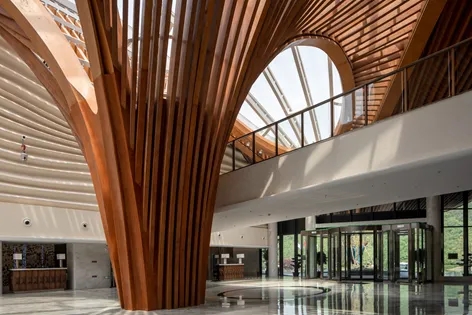
Glued wood architecture - Nanjing Garden Expo ParkThe excellent demonstration effect of Brock Commons has also successfully promoted the upgrading and iteration of local building codes. The updated code in 2019 allows the height of buildings with heavy timber structures to be increased from the original 6 floors to 12 floors, and the updated code in April 2024 increased it to 18 floors.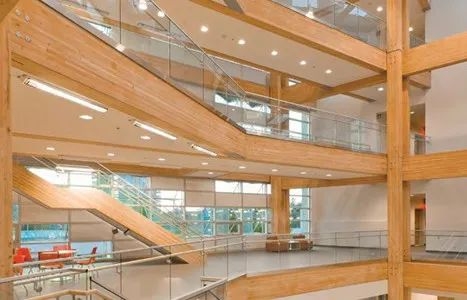
Heavy timber structure buildingIn 2020, British Columbia launched the "Mass Timber" program, actively encouraging the construction of fast, sustainable, and low-energy heavy structural buildings, in order to advance the province's long-term climate goal of "Clean BC".Development direction of Canadian timber structure industryIn Canada, the development of timber structures mainly covers two aspects. On the one hand, light wood structures are currently rapidly developing towards highly prefabricated and modular assembly. With the emergence of emerging technologies such as computer-aided design and computer-aided manufacturing, it has effectively promoted the tremendous progress of the traditional construction industry.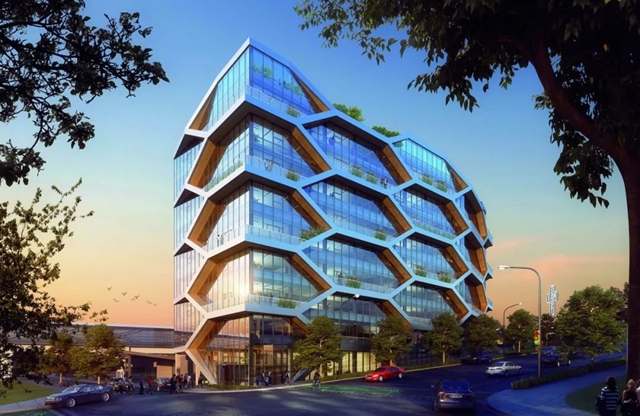
The Hive, a 10 story heavy timber office building under constructionFrom the application of engineering wood products in Canada, according to statistics in 2021, there were a total of 484 heavy timber structures with a total construction area of approximately 1.5 million square meters. Among them, 412 have been completed, 52 are under construction, and 20 are planned to be newly built.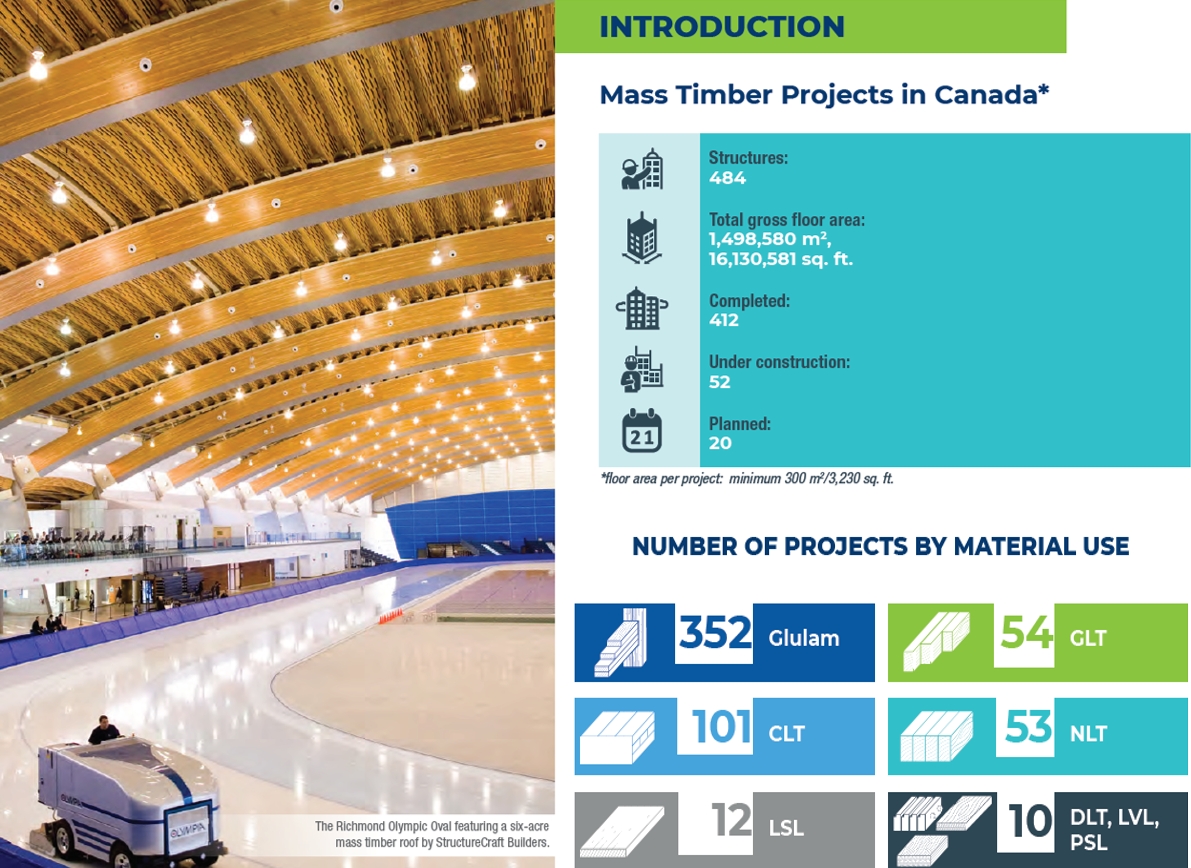
Application of Canadian engineered wood productsAmong these buildings, 352 buildings used laminated wood, 101 buildings used orthogonal laminated wood, and there were also applications of engineering wood such as DLT, LVL, PSL, etc. Relatively speaking, the most mainstream are still laminated wood and orthogonal laminated wood.Application of laminated wood in ChinaIn North America and Europe, wooden structures mainly develop in the direction of height, while the current market situation in China is moving towards large-span and long overhanging eaves. For example, the Garden Expo Park Greentown Hotel in Nanjing has a total construction area of 35000 square meters and adopts a long elliptical hollow structure design. The wood used in this project is Canadian Douglas fir.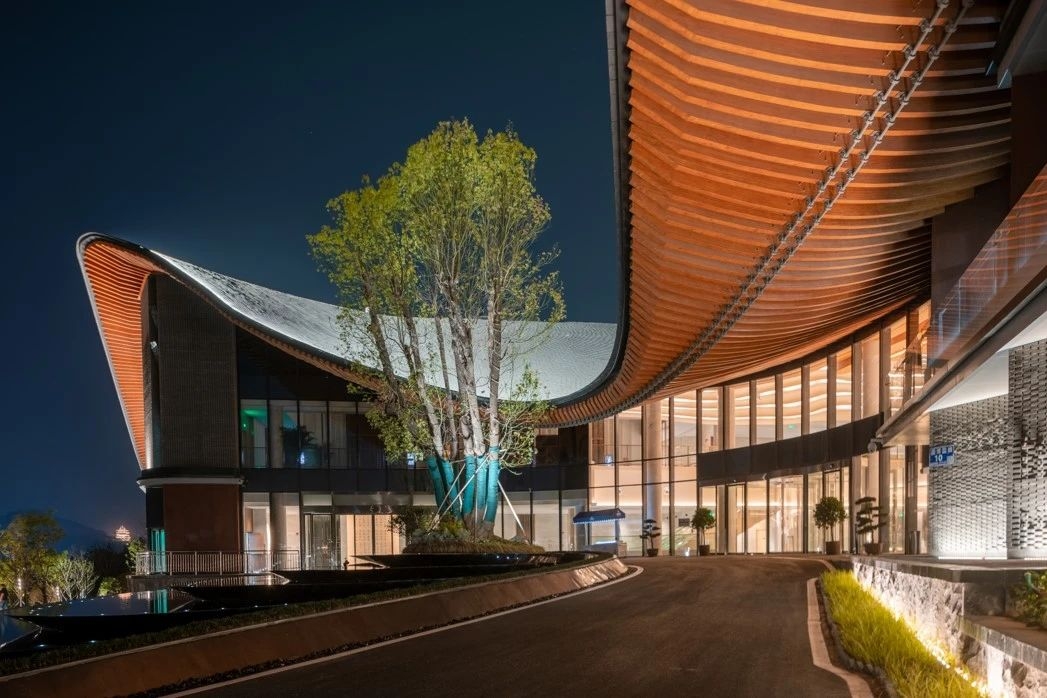
Nanjing Garden Expo ParkChengdu Tianfu Agricultural Expo Park can be regarded as the largest wooden structure building in Asia. The structural design of this project comes from an authoritative structural design company in Canada.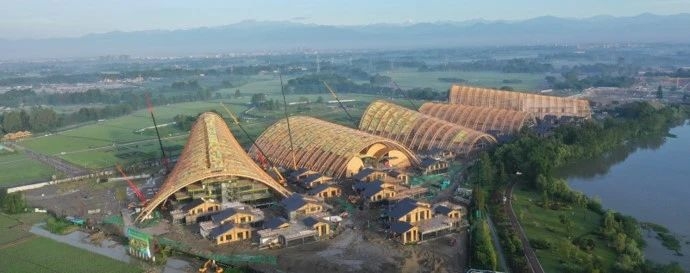
Chengdu Tianfu Agricultural Expo ParkCanadian Wood Industry has established a "glued laminated wood product technology promotion and quality certification project" in China. The main job responsibilities of this project include participating in the development of technical standards and specifications related to laminated wood products in China; Organize domestic and foreign experts to provide technical support and training in the design of heavy timber structures, production and manufacturing of laminated timber products, processing and installation, inspection and testing, etc; Establish and implement a "glued laminated wood product quality certification system" in collaboration with CABR, and combine it with green building material certification. At present, four enterprises in China have passed the quality certification of laminated wood products by the Certification Center of China Academy of Building Research in Beijing.
Wooden Corridor BridgeLet us look forward to working together with colleagues from all industries to contribute to the sustainable development of wooden structures and help achieve the grand goals of carbon peak and carbon neutrality
|


 MR SHEN
 +86 18938073910






 +86 18938073910
 2570986365@qq.com
 Address: Group 31, Songnan Village, Shaxi Town, Taicang City, Suzhou, Jiangsu Province


